
Toutes mes réponses sur les forums
-
AuteurMessages
-
4 août 2012 à 11h12 en réponse à : Truong Sa: Viet Nam proteste contre les manoeuvres de la Chine #143164
A part ça, mon cher adgech, La marine chinoise, Apres avoir « interdit la pêche » dans les zones économiques exclusives des Philippines et du Vietnam escorte 23 000 bateaux de pêche dont 9 000 dans les eaux contesté.
C’est dans tous les journeaux VN
Ci ce n’est pas du pillage.
*******************
Trung Quốc gây hấn, đưa 30 tàu cá đến Trường Sa
nota: Maintenant, c’est plus 30 mais 9000
Tháng Bảy 13, 2012
tags: bien dao, bien dong, Chinanews.com, ngu dan, tàu cá, Trung quoc, truong sa
by David UyPhó chủ tịch UBND huyện Lý Sơn Phạm Thị Hương xác nhận, tình hình tàu cá Trung Quốc xâm nhập vào gần vùng biển gần Lý Sơn thì huyện đã biết. “Cụ thể bao nhiêu vụ thì huyện không nắm rõ”. Nhận xét chung của nhiều người cho rằng, thời gian qua tàu cá Trung Quốc gia tăng sự thâm nhập vào gần bờ biển miền Trung để đánh bắt hải sản. Ngư dân Dương Tân ở xã An Hải, huyện Lý Sơn nói cùng với tàu to và công suất lớn, tàu cá Trung Quốc thường đi chung hàng đoàn từ 30 – 50 chiếc trở lên. Theo dõi của ngành chức năng cho thấy, vùng biển từ thành phố Đà Nẵng – Quảng Ngãi, hiện có khoảng 100 tàu cá Trung Quốc lén ra vào đánh bắt hải sản. Khi gặp ngành chức năng Việt Nam hay các nước, các tàu cá này kết lại thành bè lớn, bảo vệ lẫn nhau hoặc tản ra, chặt lưới, thả vật cản tàu của ngành chức năng truy đuổi. (SGTT)
Hoàng Ngọc- Tấn Khoa

Tàu cá Trung Quốc tiến ra biểnLại thêm một hành vi gây hấn mới của Trung Quốc trên biển Đông. Lúc 10g ngày 12-7 (giờ Việt Nam), Trung Quốc xua 30 tàu cá đến khu vực gần đảo Đá Chữ Thập thuộc quần đảo Trường Sa của Việt Nam.
Số này được chia thành hai biên đội gồm sáu tổ nhỏ từ cảng Tam Á.
Báo Tin Tức Trung Quốc nêu rõ mỗi tàu cá có trọng tải từ 140 tấn trở lên, chở được 15-16 ngư dân. Trong 30 tàu này có một tàu tiếp tế nặng khoảng 3.000 tấn cung cấp nước, nhiên liệu và các nhu yếu phẩm cho các tàu cá còn lại do thời gian đánh bắt kéo dài khoảng 20 ngày.30 tàu cá trên sẽ đánh bắt tại Đảo đá Chữ Thập thuộc quần đảo Trường Sa của Việt Nam.
Ngư dân tỉnh Hải Nam mỗi năm thường tự tổ chức các đợt đánh bắt cá kéo dài khoảng một tháng, nhưng đây là lần đầu tiên có sự tham gia tổ chức của Hiệp hội ngư dân.
Nhật báo Trung Quốc cảnh báo: Những tàu lần này khác hẳn các tàu trước đây, khi được trang bị hệ thống định hướng và thủy thủ trên tàu rất chuyên nghiệp.
Rõ ràng Trung Quốc đang tìm cớ gây hấn khi Tân Hoa xã loan báo họ đã cử các phóng viên túc trực trên tàu cá để “liên tục đưa tin về hoạt động đánh bắt cá”. Tàu tuần tra và các căn cứ của Trung Quốc cũng được đặt trong tình trạng luôn sẵn sàng ứng phó với các “tình huống bất ngờ” có thể xảy ra để “bảo vệ” việc đánh bắt cá.

30 tàu cá Trung Quốc trên đường tiến ra Trường Sa -Ảnh: Chinanews.comTrong diễn biến khác, Chánh văn phòng nội các Nhật Bản Osamu Fujimaru cho biết Nhật Bản đã gửi thư phản đối thứ 2 đến chính quyền Bắc Kinh sau khi Lực lượng bảo vệ bờ biển Nhật Bản (JCG) lại phát hiện một tàu tuần tra Trung Quốc ở gần quần đảo Senkaku hôm 12-7.
Theo báo Japan Times, tàu Ngư chính 33001 bị phát hiện vào sáng ngày 12-7 tại đảo Kuba nằm trong lãnh hải thuộc quyền tài phán Nhật Bản. Đến giữa trưa có thêm 2 tàu khác kéo đến đây.
Khi lực lượng tuần tra Nhật Bản tra hỏi qua điện đàm về mục đích xuất hiện của tàu Ngư chính 33001 tại khu vực này thì phía tàu Trung Quốc phản hồi rằng “đang giám sát vùng biển của Trung Quốc”.
Ông Fujimaru cho biết đơn vị bảo vệ bờ biển Nhật Bản đã được ra lệnh “duy trì cảnh giác cao độ và tiếp tục giám sát tình hình”.
Trước đó một ngày, Nhật Bản đã triệu hồi đại sứ Trung Quốc để phản đối việc Bắc Kinh điều ba tàu tuần tra gồm các tàu Ngư chính 35001, 204 và 202 đến gần quần đảo Senkaku ngày 11-7.
Theo Tuổi Trẻ
Xem thêm trên Dân Trí; SGTT; Tiền Phong; GDVN
il y avait aussi une stèle vietnamienne sur l’île occupée par les Philipins.

Hình 1.20 – Bia chủ quyền Việt Nam tại đảo Song Tử Đông (quần đảo Trường Sa)
Luận n -Hnh ẢnhLe groupe de deux îles situées à la longitude 114o21′ Nord et de latitude 111o29 Est de Greenwich, avec leurs îles dépendantes (Prise de possession Avril 10, 1933).
Les îles mentionnées ci-dessus et d’îlots désormais relèvent de la souveraineté française (le présent avis annule l’avis précédent inséré au Journal officiel datée du 25 Juillet 1933, la page 7784).
En 1939, le Japon a occupé ces îles jusqu’à la fin de la Seconde Guerre mondiale.
En 1956, ces îles françaises sont transférée au Sud-Vietnam.
En 1959, le gouvernement du Sud-Vietnam les a rebaptisé « Song Tu » (les « jumelles », parce que deux îles très similaire ) avec « Tây » (ouest) et « Dong » (Est). Elles ont été annexées à la province Phuoc Tuy du Sud Vietnam.
Le 24 mai 1963, des stèles de souveraineté ont été reconstruites sur Song Tu Dong (Nord-Est Cay) et Song Tu Tay (Sud-Ouest Cay) par les membres de l’équipage des trois navires Huong Giang, Lang Chi et Ky Hoa du Vietnam du Sud.
En 1968, les troupes des Philippines occupaient Nord Cay (île Parola, Song Dong Tu) et du Sud-Ouest Cay (île Pugad, Song Tu Tay). En 1975, Southwest Cay a été capturé par le Sud-Vietnam et a été repris par plus tar par le Vietnam unifié. Les Philippines ont continué d’occuper l’île nord-est Cay jusqu’à présent.
En 1975, une fête a eu lieu pour l’anniversaire de l’officier philippin commandant de l’île Nord-Est. Les forces philippines qui gardaient l’île Sud-Ouest Cay sont parti assister à la fête et à leur retour, ont constaté que les Sud-Vietnamiens, qui étaient alors alliés, avaient occupé l’île en leur absence.
En Avril 1975, il y avait une échauffourée entre la marine sud-vietnamienne et les forces nord-Vietnam sur cette île. Les forces du Nord-Vietnam ont gagné et ont occupé l’île. Certains des Sud-Vietnamiens qui avaient repris l’île aux Philippines ont fui Cay Sud-Ouest et ont nagé jusqu’à Cay Nord-Est pour chercher refuge.
Le 22 aout 1956, les Français transfèrent la souveraineté des îles à la République du Vietnam (Sud Vietnam) et une stèle est érigée :

Cột mốc chủ quyền xây dựng năm 1956. ( bây giờ người ta không sử dụng nữa, trông nó tàn tạ quá!)Mais en 1968, les Philippines occupent les îles.
Début 1975, profitant que les soldats philippins qui occupaient Song Tử Tây étaient partit à la fête de l’anniversaire de leur commandant sur l’ïle jumelle, les Sud Vietnamiens reprennent possession de l’autre.
Le 30 avril 1975, les Nord Vietnamiens sont vainqueurs et les soldats du Sud se réfugient à la nage sur l’île philippine.
Depuis, l’île du Sud Ouest est habitée par des soldats du Vietnam unifié et leur famille
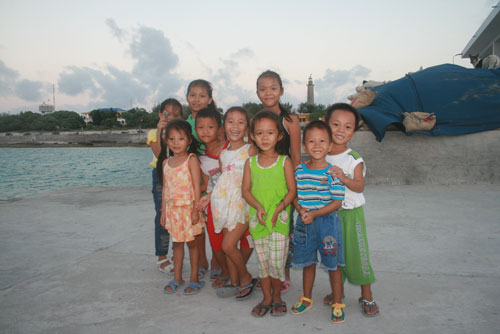
Các cư dân nhỏ tuổi trên đảo Song Tử Tây trên âu thuyền chắn sóng, phía sau là ngọn đèn biển xã đảo Song tử Tây, huyện Trường Sa, tỉnh Khánh Hòa.
VOH – Đài Tiếng nói Nhân dân TPHCM – The Voice Of HCM City People
http://www.qdnd.vn/qdndsite/vi-VN/71/5/468/psa/Default.aspxDes vaches
[IMG]http://langvietonline.vn/ImageHandler.ashx?ThumbnailID=90459[/IMG]
Đàn bò trên đảo Song Tử Tây..
Làng phya même des blondes !
[IMG]http://admin.baokinhteht.com.vn/Images/Uploaded/Share/2011/04/22/Truong-Sa.JPG[/IMG]
Chiến sỹ đảo Song Tử Tây chơi đàn T’rưng cùng các cô gái Tây Nguyên
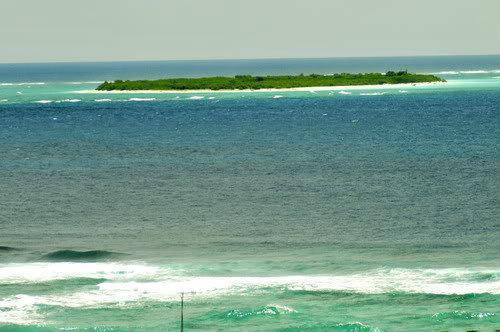
54 dân tDu haut du phare de Song Tử Tây (Southwest Cay), l’île vietnamienne, on voit très bien ce qui se passe sur Parola (Northeast Cay) l’île philippine :
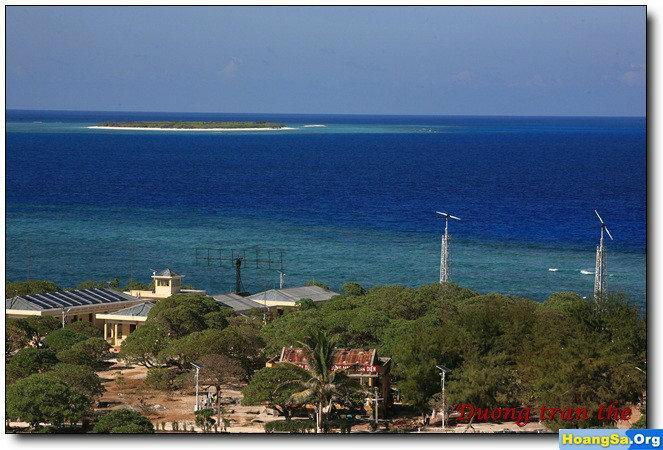
On regarde la jumelle avec des jumelles :
Group of two islands situated at latitude 111o29′ north and longitude 114o21′ east of Greenwich, with their dependent isles (36) (Possession taken April 10, 1933).
The above-mentioned isles and islets henceforward come under French sovereignty (this notice cancels the previous notice inserted in the Official Journal dated July 25, 1933, page 7784).
In 1939, Japan occupied these islands until the end of World War II.
In 1956, French transferred these islands to South Vietnam.
In 1959, South Vietnam Government renamed « Song Tử » (meaning twin because two islands very similar together) with « Tây » (meaning west) and « Đông » (meaning East) to identify them.They was annexed to Phuoc Tuy province, South Vietnam.
On May 24, 1963, the sovereignty steles were rebuilt on Song Tu Dong (North East Cay) and Song Tu Tay (South West Cay) by crew members of the three vessels Huong Giang, Chi Lang and Ky Hoa of the South Vietnam.
In 1968, Philippines troop occupied Northeast Cay (Parola Island, Song Tu Dong) and Southwest Cay (Pugad Island, Song Tu Tay). In 1975, Southwest Cay was captured by South Vietnam and was taken over by later unified Vietnam. The Philippines continued to occupying the Northeast Cay until now.
In 1975, a party was held for the Philippine commanding officer at Northeast Cay. Philippine forces guarding the Southwest Cay attended the party and upon their return, found that the South Vietnamese, who were then allies, had occupied the island in their absence.
In April 1975, there was a skirmish between the South Vietnamese Navy and North Vietnam task force on this island. The North Vietnam task force won and occupied the island. Some of the South Vietnamese who had taken over the island from the Philippines fled Southwest Cay and swam to Northeast Cay to seek refuge.
Le 22 aout 1956, les Français transferent les îles à la République du Vietnam (Sud Vietnam) et une stèle est érigée :
3 août 2012 à 13h05 en réponse à : Truong Sa: Viet Nam proteste contre les manoeuvres de la Chine #143163Il y a 2 mois, les Vietnamiens ont envoyé 2 Soukhoi 27 faire le tour de leurs îles ; la Chine a parlé de « provocation » 😆
Un voyage de 1500 km ; avec des passages à 500m d’altitude
Mais je n’ai pas vu d’article dans la presse occidentale.Même une « petite compagnie d’exploration pétrolière » va y regarder à 2 fois avant de faire des forages illégaux à moins de 200 km des bases de chasseurs supersoniques vina ; leur investissement peut être détruit en quelques minutes.
Comme on dit chez nous, « les sourds n’ont pas peur des armes » mais avec ce genre de truc, même les sourds ressentent les vibrations :
C’est justement fait pour que tout le monde soit au courant :
***********************************************
Vietnam’s Su-27s mount first Spratly patrols from Phu Cat
Vietnam People’s Air Force Sukhoi (Su-27, Flanker). Photo credit: unknownVietnamese news portal Thanh Nien Online has reported that Vietnam People’s Air Force Sukhoi Su-27 ‘Flankers’ have mounted their first patrols of the disputed Spratly Islands from their base at Phu Cat.
The Su-27s, from the 940th Air Regiment of the 372 Air Division, undertook at patrol of some of the islands claimed by Vietnam at an altitude of 500m (1640 ft), accompanied by an Antonov An-26 of the 918th Transport Regiment.
The disputed Spratly Islands, believed to be rich in oil and other resources, are wholly or partly claimed by China, Taiwan, Malaysia, Vietnam, the Philippines and Brunei.
C’est vrais que les jeunes travailleurs et les ouvriers ont rarement un fixe.
Mes copines du marché n’ont plus.
Je me demande s’il existe encore des cabines en état de fonctionnement ?
A une époque, elles avaient déjà étés squatté par des vendeurs de chaussures.
Même en France, celles de France Telecoms semblent ne plus être entretenues.
Dommage car elles comptent comme des fixes3 août 2012 à 6h14 en réponse à : Truong Sa: Viet Nam proteste contre les manoeuvres de la Chine #150435QUOTE=DédéHeo;147514 Si j’ai bien compris : Le pétrolier chinois CNOOC lance un appel d’offre aux compagnies étrangères pour exploiter 9 lots de prospection qui se trouvent tous dans la zone économique exclusive du Vietnam à 200 miles nautiques

Bản đồ chào thầu 9 lô dầu khí trái luật của Tổng công ty Dầu khí Hải dương Trung Quốc (CNOOC).‘Yêu cầu Trung Quốc hủy ngay việc mời thầu sai trái’
Hội Luật gia Việt Nam cho rằng, việc phía Trung Quốc mời thầu thăm dò, khai thác 9 lô dầu khí trên vùng đặc quyền kinh tế cũng như thềm lục địa của Việt Nam ở Biển Đông là vi phạm công ước Luật biển năm 1982. /QUOTE]
Hier, Reuters publie un article qui fait le point sur cette adjudication frauduleuse des Chinois :
China unveils oil offensive in S.China Sea squabble | ReutersLe compte rendu de rfi :
Trung QuCes soit disant « petites compagnies » de forage pétrolié qui sont près à tout pour gagner leur vie… vont être nettement refroidies quand elles vont voir passer les nouveaux avions de chasse Soukoï 27 des Vietnamiens au dessus de leur tête 😆
Trung Quốc tiết lộ kế hoạch gọi thầu khai thác thềm lục địa của Việt Nam
Trọng Nghĩa
Sau khi loan báo vào cuối tháng Sáu việc phân lô vùng thềm lục địa của Việt Nam và mời các tập đoàn quốc tế đấu thầu thăm dò dầu khí, tập đoàn Trung Quốc CNOOC đang đẩy mạnh việc thực hiện kế hoạch đó. Theo Reuters trong bản tin hôm qua 01/08/2012, Bắc Kinh mở ra mặt trận thứ ba nhằm áp đặt chủ quyền của mình trên vùng Biển Đông, song song với mặt trận ngoại giao và quân sự.
Theo hãng tin Reuters, sau khi loan báo quyết định gọi thầu khai thác 9 lô nằm trong các vùng sát bờ biển miền Trung và miền Nam Việt Nam mà Trung Quốc tự nhận chủ quyền, tập đoàn dầu khí hải dương Trung Quốc CNOOC đã cho các công ty nước ngoài thời hạn một năm để tham gia đấu thầu.
Một nguồn tin công nghiệp biết rõ hồ sơ này đã tiết lộ với hãng Reuters rằng từ nay tới tháng Sáu sang năm, các tập đoàn dầu khí sẽ phải cho biết quyết định về việc đấu thầu 9 lô kể trên. Theo nguồn tin này, xin ẩn danh, thì từ lúc quyết định mời thầu được loan báo, tập đoàn CNOOC đã nhận được nhiều đề nghị không chính thức từ phía các tập đoàn ngoại quốc.
Vào tháng Bảy vừa qua, ông Vương Nghi Lâm, chủ tịch tập đoàn CNOOC đã tuyên bố với báo chí rằng lời mời thầu họ đưa ra về 9 lô ngoài khơi Việt Nam đã thu hút nhiều mối quan tâm từ các công ty Mỹ, nhưng ông từ chối cho biết đó là những công ty nào.
Theo các nhà phân tích, rất có thể là sẽ có một số công ty đáp ứng lời gọi thầu của Trung Quốc, nhưng chủ yếu đó sẽ là những công ty nhỏ, độc lập, còn các đại tập đoàn sẽ thận trọng hơn trước khả năng tranh chấp bùng nổ, nhất là các tập đoàn đã có làm ăn với Việt Nam như Exxon Mobil của Mỹ, Gazprom của Nga hay ONGC của Ấn Độ.
Bắc Kinh hiện đòi hỏi hầu như toàn bộ vùng Biển Đông, được cho là có nguồn dầu khí phong phú, nhưng vấp phải sự phản đối của Việt Nam, Philippines, Brunei, Malaysia và Đài Loan, vốn cũng tuyên bố chủ quyền trên một phần của vùng biển.
Ngay sau khi tập đoàn CNOOC loan báo việc gọi thầu 9 lô ngoài khơi bờ biển Việt Nam, Tập đoàn Dầu khí Quốc gia Việt Nam, đã lên án hành động của Trung Quốc, bị cho là « vi phạm nghiêm trọng luật pháp quốc tế » vì các lô đều nằm trong vùng đặc quyền kinh tế 200 hải lý và thềm lục địa của Việt Nam. PetroVietnam cũng kêu gọi các công ty năng lượng quốc tế không tham gia cuộc đấu thầu do Trung Quốc bày ra.
tags: Biển Đông – Châu Á – Trung Quốc – Việt NamChina unveils oil offensive in S.China Sea squabble
By Randy Fabi and Chen Aizhu
SINGAPORE/BEIJING | Thu Aug 2, 2012 2:58am IST
(Reuters) – First came the diplomatic offensive, then the flexing of military muscle.
Now, China is opening a third front to assert its claims in the South China Sea – moving ahead with its first major tender of oil and gas blocks in disputed parts of its waters.
China National Offshore Oil Corp (CNOOC), a state oil giant, invited foreign firms in late June to bid on oil blocks that overlap territory being explored by Vietnam, putting the 160,000 sq km of water on offer at the forefront of Asia’s biggest potential military flashpoint.
Oil companies have until next June to decide whether to bid for the nine blocks, said a Chinese industry source with knowledge of the matter. CNOOC, parent of Hong Kong-listed CNOOC Ltd (0883.HK), has received many informal enquiries from foreign oil companies, added the source, who did not want to be identified.
Beijing claims almost all the South China Sea, a body of water believed to hold rich reserves of oil and gas and which stretches from China to Indonesia and from Vietnam to the Philippines. Vietnam, the Philippines, Taiwan, Brunei and Malaysia claim parts of it.
Any conflict in the sea, one of the world’s busiest trade routes, would have global repercussions given the $5 trillion in ship-borne trade carried on its waters each year.
« The Chinese government’s stance is clearer than ever … They want to take on and develop this region, » said an executive at a global oil major, who declined to be identified because of the sensitivity of the matter.
The Philippines put two disputed blocks on offer on Tuesday but only received three separate bids for exploration rights, an indication that there was little appetite to go up against China in the South China Sea.
« China’s view is that the little countries, like Vietnam and the Philippines, are increasingly stealing its resources and it must demonstrate it is serious about upholding its claims, » said Ian Storey, a senior fellow at the Institute of Southeast Asian Studies in Singapore.
Map of South China Sea link.reuters.com/xyw28s (nota: voir les liens dans l’article original)
Graphic on Spratlys: link.reuters.com/sas76s
Graphic on naval power: link.reuters.com/ces76s
Vietnam’s state oil firm, Petrovietnam, has condemned the CNOOC tender, calling it a « serious violation of international law » since the blocks lie within the country’s 200-nautical mile exclusive economic zone and continental shelf. It urged energy firms not to participate in the tender.
CNOOC Chairman Wang Yilin told reporters last month the tender was attracting interest from U.S. companies, but declined to name them.
« China does not have any well and oil production in the resource-rich mid-south area of the South China Sea, while other countries have produced more than 50 million tonnes of oil in the territory … that China claims, » Zhou Shouwei, a former vice president of CNOOC, said in July.
Other analysts have cast doubt on the figure, since Vietnam pumps most of its 16 million tonnes (126 million barrels) of oil a year from undisputed areas, and the Philippines has yet to tap into significant amounts of oil or gas in territory also claimed by China.
MAJORS WARY
Small, independent oil firms could be the main respondents to China’s offer, analysts say. Global oil majors will be more wary of the escalating tensions, especially those already working offshore Vietnam such as Exxon Mobil (XOM.N), Russia’s Gazprom (GAZP.MM) and India’s ONGC (ONGC.NS).
Beijing awarded a South China Sea oil block in 1992 that has yet to be explored due to the dispute. The block, owned by U.S.-based Harvest Natural Resources (HNR.N), overlaps territory being explored by Petrovietnam and Canada’s Talisman (TLM.TO).
« There are hundreds of independent upstream companies in the world willing to go anywhere for a small volume of oil to turn a profit, » said Kang Wu, managing director of consultancy FACTS Global Energy.
« Companies will go to the disputed South China Sea and rely on the Chinese government to protect them and ensure that drilling is safe. If they cannot get those guarantees, then they don’t drill, don’t spend a penny, and don’t lose. »
CNOOC has limited experience in deepwater drilling and will need help from foreign companies in the South China Sea. The $89 billion company recently launched its first ultra-deepwater rig near Hong Kong, and could move it further south to explore deeper waters in the South China Sea, according to Chinese energy experts. CNOOC has described the vessel as « mobile national territory ».
Beijing’s oil offensive follows moves on the diplomatic and military fronts.
At a meeting last month of foreign ministers of the Association of South East Asian Nations (ASEAN), China’s influence led to an unprecedented breakdown in the 10-member group’s preference for unity.
China’s close ally Cambodia, the meeting’s host, blocked every attempt to put the South China Sea on the agenda, said diplomats from other member nations. Cambodian diplomats in turn accused the Philippines and Vietnam of trying to hijack the meeting.
On the military front, China has approved the establishment of a military garrison, located in Sansha city in the Paracel Islands, for the South China Sea.
AVOID CONFLICT
Nevertheless, analysts believe Beijing wants to avoid a conflict, particularly if it raises the prospect of U.S. intervention.
« Energy exploration activities in these disputed waters will lead to more diplomatic rows, and potentially skirmishes between surveying and law enforcement vessels of opposing claimants, but it is unlikely to trigger military confrontations, » said Stephanie Kleine-Ahlbrandt, Northeast Asia Director for the International Crisis Group think-tank.
« However, if it is discovered that the area does in fact contain energy reserves and if China decides to drill in these areas, the situation could change drastically. »
CNOOC has drilled around a dozen deep sea wells so far in the South China Sea, focusing mainly in the north and staying away from politically sensitive waters to the south.
Vietnam and the Philippines have partnered with foreign oil companies to develop oil blocks deeper into disputed waters, sparking several tense incidents between exploration vessels and Chinese military vessels.
In the Philippines, Forum Energy (FEP.L) is planning to drill its first exploration well in the Reed Bank, which is also claimed by China, possibly before the end of the year.
Vietnam offered eight blocks more than three years ago that overlap with China’s recent oil offering, although no exploration wells have been dug.
Estimates for proven and undiscovered oil reserves in the South China Sea range from 28 billion to as high as 213 billion barrels of oil, the U.S. Energy Information Administration said in a March 2008 report. That would be equal to more than 60 years of Chinese demand under the most optimistic outlook, and surpass every country’s proven oil reserves except Saudi Arabia and Venezuela, according to the BP Statistical Review.
For natural gas, the South China Sea has a 50 percent chance of at least 3.79 trillion cubic metres of undiscovered conventional gas, equivalent to more than 30 years of Chinese consumption, according to the U.S. Geological Survey in a June 2010 report.
(Additional reporting by Charlie Zhu in Hong Kong, Jeffrey Jones in Calgary, Braden Reddall in San Francisco, Erik dela Cruz in Manila, Chau Ngo and Ho Binh Minh in Hanoi, Melissa Akin in Moscow, and Malini Menon in New Delhi; Editing by Raju Gopalakrishnan)
Les Vietnamiens ont construit un grand phare sur leur l’île ; celle du Sud Ouest. Sur celle des Philipins, celle du Nor Est, il n’y a qu’une balise lumineuse.
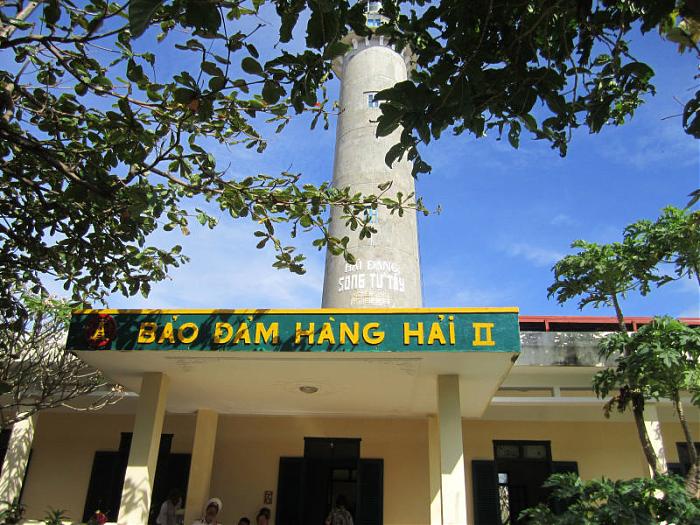
Hải đăng Song Tử Tây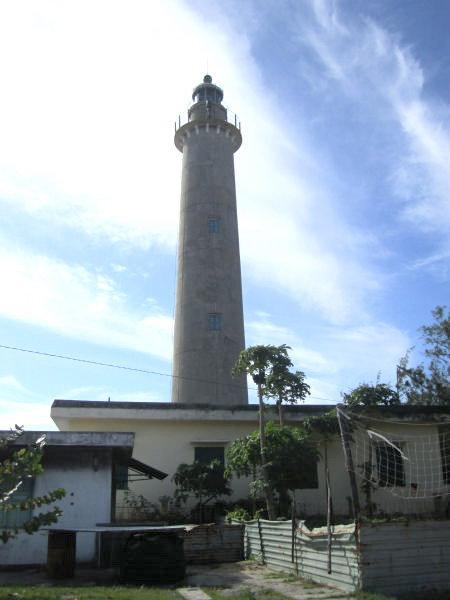
Et il y a de jolies petites maisons pour les familles :
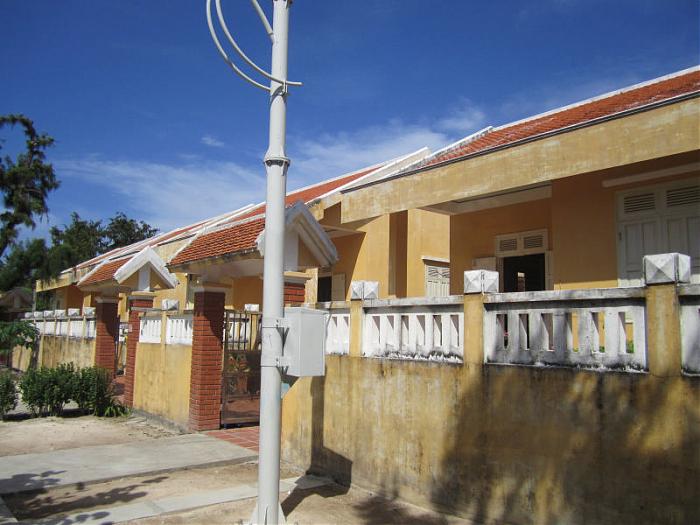
Khu dân cư Thị trấn Trường SaLa foto satellite Google date de quelques année, depuis les Vietnamiens ont construit un petit port.
moi, je suis accro aux podcast de la radio rfi: RFI – RFI en vietnamien On peut écouter et lire les articles avec les différents accents des speakers
Toutes les épiceries du pays vendent du thé.
Les salons de thé et les vendeurs de thé à la tasse sont approvisionnés par des « grossistes en vélo » maintenant ; ils ont peut-être des Wave chinoises.
Ces grossistes se promènent avec un baluchon (bao tai, comme les sac de riz de 50 kilo) de 50 à 100 litres de thé ; 40 kilo ???
Une fois, en l’absence un patron du salon de thé de mon quartier, j’ai surpris une conversassion entre un grosssite et la jolie serveuse ; probablement une de ses relatives.
Alors je lui demande des explications et il me répond :
– Ah, vous savez beaucoup de choses… Bien oui, au Vietnam, pour faire du bon café, il faut de l’opium, (nota: C’est notoirement connu) pour faire du bon thé, il faut de l’opium aussi…
Je me demande à quel point c’est vrai… ???Double LoL !
Tu as parfaitement raison : Le thé vert au lotus ou au jasmin… ou au mentol vendu en France, c’est du grand n’importe quoi !
« Adapté au goût des Français » disent les fournisseurs de la grande distribution.Toutes les épiceries vendent du thé vert ; mais je crois qu’il ne faut pas demander du « thé vert » (tra sanh)
Car il y a confusion avec le thé frais, (tra tuoi)Souvent, les marchand de thé à la tasse sur le trottoir ou les salons de thé vendent des paquet de thé
Au pire, tu peux te rabattre sur les supérettes comme les Hapro ; même pas la peine de marchander.
Le thé Thai Nguyen est le seul qui soit vendu en paquet de 200 grammes à 1 kilo
Il y a beaucoup de producteurs et différentes qualités.
Donc c’est le moins cher et tu passes pour une pauvre qui « consomme local ».
Alors on essaye de te refiler du Lipton en sachet (tra tui) ou pire du Dilam aromatisé à la fraise de synthèse dont rafolent les ado.
@thuong19 148241 wrote:
ok dclalot, gratuit vers un fixe mais 34cts/min avec un fixe. dommage que la plupart de nos correspondants viêtnamiens n’aient que des portables . mais c’est toujours une bonne nouvelle comme dirait DD et pg29
Mes corespondants sont des familles et des vieux, ils ont tous un fixe pour avoir internet ou par habitude et c’est de moins en moins cher
Sinon, des fixes, y en a plein les bureauxOui, il faut approfondir la relation car sinon tu crois faire venir une jeune étudiante de bonne famille quoi que modeste, belle et pauvre et en réalité, c’est une vielle punk toxicomane pleine de tatouages et de piercing.
@DédéHeo 145531 wrote:
elle a passé le pont la nuit, le matin, elle était encore là


C’est une vielle punk !Bracelet jonc jade bijoux asiatiques zen equilibre Flora
[2968_BJJ]25.90EUR
[IMG]http://www.naturelexotic.com/images/Image/2968_BJJ.JPG[/IMG]
Dans la culture chinoise le Jade a une grande valeur.
Confucius (551-479 av JC) le disait : « il y a 11 De (vertus) dans le jade ». ( pureté absolue, intelligence, justice, art, fidélité, sincérité, ciel , Terre, chasteté, chance).Le jade(verte) protège les vulnérables, nous donne de l’équilibre et des forces faces aux dangers et aux évènements difficiles.Le jade est la pierre de la guérison aussi. Si le jade est clair (elle peut inspirer l’amour et le pardon ).
C’est un bracelet à la fois original zen et ethnique, plein de fantaisie et de force vitale !
Dimensions : diamètre intérieur : 6 cm; H environ : 1.5 cm
Compositions : pierre de jade,
Poids : 300 gr
nb : la couleur des bracelets en jonc de jade peut varier sensiblement mais reste très joli. merci.
Notre conseil : Nous vous conseillons de mesurer le diamètre de votre poignet qui ne doit pas dépasser 6 cm. Afin que le bracelet en jonc passe plus facilement, nous vous conseillons de mettre un peu de crème au niveau du poignet avant.
J’aime bien le coup de la crème pour faire passer… il parait que le yaourt, ça marche aussi
Voilà une nouvelle que tout le monde attendait !
@HUYARD Pierre 148224 wrote:
le Macclesfield Bank – Wikipedia, the free encyclopedia
6,500 km2 a 10 m de profondeur, ca doit etre genial pour la peche et les crustaces, mais ca doit craindre les jours de forte houle.
Par gros temps, il doit ya voir des brisants épouvantables tout autour.(***)
un peu de geologie.
ScienceDirect.com – Gondwana Research – Palaeozoic and Mesozoic tectonic evolution and palaeogeography of East Asian crustal fragments: The Korean Peninsula in context

Pas mal, le jeux : devinez les 20 numéro !
1 = île Hai Nam (La grande ïle de la Chine du Sud et la dernière légale)
13 = Macclesfield Bank un immense lagon engloutie12 = Hoang Sa – Paracels
10 = Truong Sa – Spratly
11 = Le caillou des Philipins que les Chinois essayent de voler est là dedans
Notez que la « ville virtuelle chinoise » est 12 + 13 + 10 (et + 11)
et que tout ça n’est pas sur la même plaque continentaleEt encore moins sur la plaque continentale Chine + Vietnam (en marron)
Un pays peut réclamer une extension de sa zone exclusive en se basant sur sont plateau continental et à condition de ne pas empiéter chez un autre.
Mais là, c’est du grand n’importe quoi !
Don Camillo disait : »Pepone est un âne !«
Devant les instances internationales, le gouvernement chinois va passer pour un troupeau d’ânes bâté.Mais je crois qu’il s’agit d’un bras de fer entre les vieux dirigeants Militaro Stalino maoïstes et le reste de la population chinoise.
Ces gens se comporte comme Hitler et une partie de la population fanatisé les suit.
Hitler : – Vous voullez la guerre totale ?
Le peuple : – Oui ! Oui !
Hitler : Vous voullez la totale destruktion ?
Le Peuple Oui, ! Oui !Mais tous les Chinois ne sont pas aussi con !
Et Hong Kong commence à grogner
et il y a eu des manif anti polution…Mais la plus part des Européens continue à dire « La Chine fait çi », « la Chine pense ça »
La réalité est que le coût du travail en Chine augmente très vite car ils sont de plus en plus riche -
AuteurMessages
